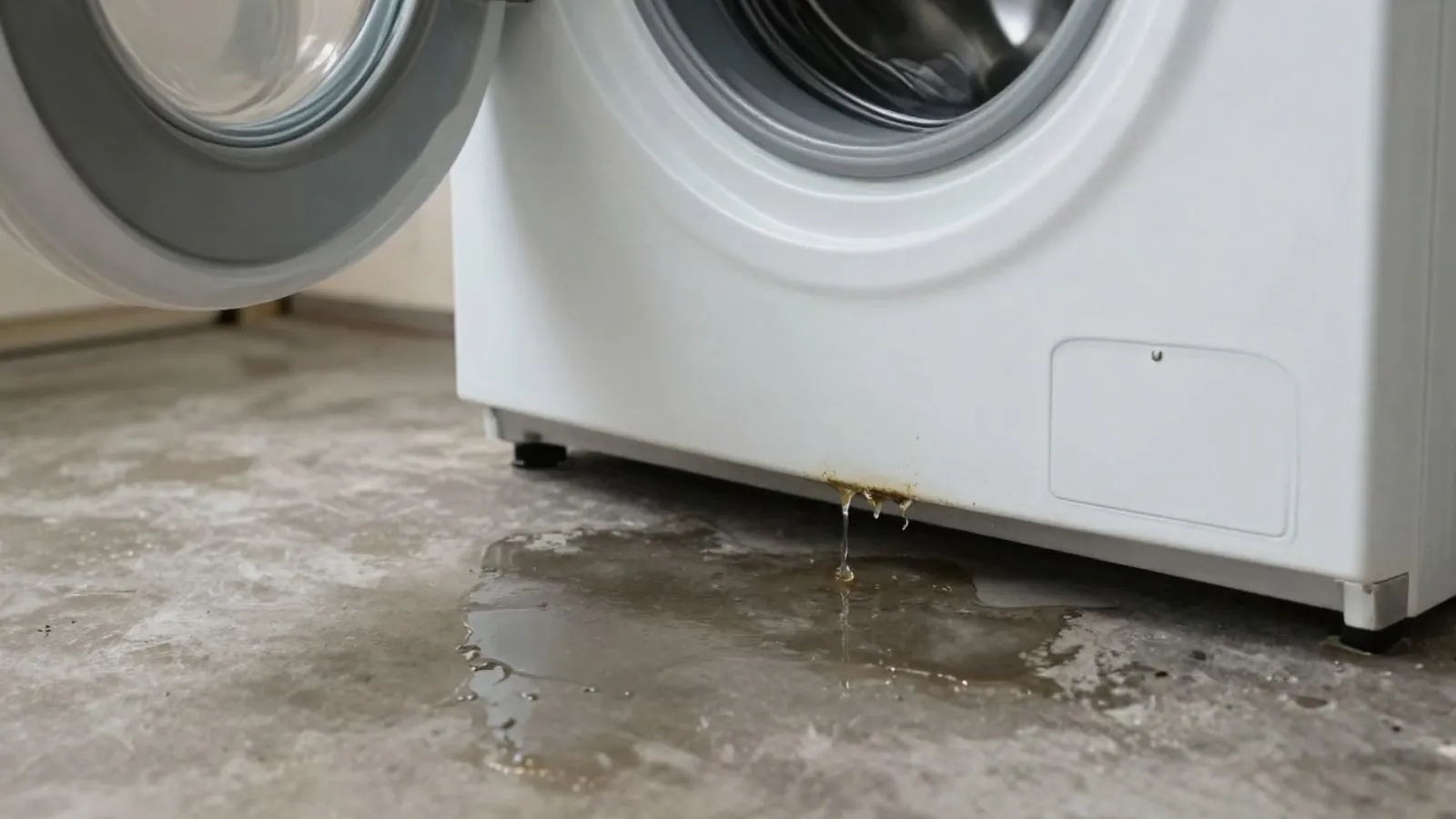
Emergency appliance leak water damage in Glastonbury covers washing machines, dishwashers, refrigerators with ice makers and similar equipment whose hoses, valves or pans fail. These leaks tend to be slow or hidden, so the damage is often in a subfloor or wall before anyone notices.
The phone line is open 24/7. If a washer hose bursts or a dishwasher overflows, shut off the supply valve behind or beside the appliance, unplug it only if the outlet is dry and pull it away from the wall if you can do so safely. Then call so extraction and a moisture check can start.
When an appliance leak becomes urgent
A washing machine supply hose that lets go can pour water for as long as the tap is open. A dishwasher with a failed seal leaks onto the kitchen floor each cycle. A refrigerator line behind the unit leaks where nobody looks.
Urgent signs include water running from under a unit, a spongy floor, a musty smell, a stain on a ceiling below and a utility bill that jumps for no reason.
Unplug only with dry hands and floor
Appliances are electrical. If the floor is wet around the plug or outlet, stay back and cut power at the panel from a dry spot, or call an electrician.
Common sources and what they leave behind
Washer supply hoses and valves
A burst hose releases a lot of water quickly. A slow weep stains cabinets and baseboards.
Dishwasher seals and lines
Water spreads under cabinets and into subfloor at the kitchen edge. See kitchen water damage.
Refrigerator ice maker lines
Small drips behind the unit soak the floor edge for weeks.
Laundry drains and pans
Overflow can run to adjacent rooms or the floor below.
Call the line for a moisture check.
How the leak is traced and dried
The crew traces where water went, which is not always where the appliance sits. Moisture meters check the floor, wall base and the cabinet toe kick. Thermal imaging helps find damp areas behind panels. Extraction and drying then follow, with swollen cabinet bases or flooring removed if they cannot dry.
Hardwood and laminate often need separate attention. See hardwood floor water damage repair for how boards cup and recover.
Leak patterns compared
| Pattern | Typical cause | Typical damage |
|---|---|---|
| Sudden flood | Hose or valve failure | Large wet area, possible rooms below |
| Repeating cycle leak | Door seal or pump leak | Cabinet base, subfloor edge |
| Slow drip | Line fitting, pan | Hidden wet subfloor, odor |
| Overflow | Drain blockage | Floor and nearby rooms |
What affects the scope and price
The scope and price are explained before work starts.
How long the leak ran
Days of slow leaking mean more hidden water.
Floor type
Tile, vinyl, hardwood and carpet all react differently.
Cabinet material
Particleboard swells and often needs replacement.
Floors below
Water that dropped through adds another level of drying.
A practical shutoff checklist for laundry and kitchen leaks
Know where the valves are before something fails. Washing machines have two supply valves on the wall, one for hot and one for cold. Dishwashers usually have a small stop valve under the sink, and refrigerators often have a saddle valve or stop valve behind or beneath the unit.
Turn the valves off by hand until snug and do not force a stuck one, since a broken valve makes the leak worse. If a valve will not close, shut off the main water supply and call. Then photograph the failed hose or fitting and the wet floor before anything is mopped up, because the age and condition of the part can matter for a claim.
Why laundry and kitchen floors hide water
Flooring in kitchens and laundry rooms often sits over a layered subfloor. Vinyl and tile hide water completely, so a floor that looks fine on top can be soaked underneath. Water also moves sideways through the gap beneath cabinets and behind baseboards.
This is why a moisture meter reading matters more than a visual check. A reading at the edge of the cabinet and along the baseboard shows how far water traveled, and it guides how much material has to come out and what can stay.
Safety and the standard behind the work
Appliances run on power and water together. Unplug the unit only from a dry spot, and cut the circuit at the panel if you cannot reach the plug safely. Drying follows the methods in ANSI/IICRC S500, which we cite as a reference only.
- 1
Shut the supply valve
Close the hot and cold lines behind the machine.
- 2
Unplug from a dry position
Use the panel if the floor around the outlet is wet.
- 3
Keep the failed hose
It shows how the loss began.
Insurance note
Sudden discharge from an appliance is often covered, while long-term seepage and wear often are not. Keep the failed part if you can and take photos before moving the appliance.
Calls from nearby towns
The line covers 06033 and 06073 in Glastonbury and Marlborough.
Questions people ask
Do you handle appliance leak emergencies at night or on weekends in Glastonbury?
Yes. The line is open 24/7. A washer hose can fail at any hour.
Do you repair or replace the appliance?
No. That is an appliance or plumbing repair. We handle water cleanup and drying.
Can I dry a laundry room with fans alone?
Fans help surface drying, but they do not find hidden moisture in subfloor and wall bases. Meters are needed.
Will the cabinet base need to be replaced?
If it is particleboard and has swollen, it often does. Solid materials may dry.
What if the leak went on for weeks?
Longer leaks usually involve subfloor and may involve mold. Call for an assessment.
The 24/7 line is open now.