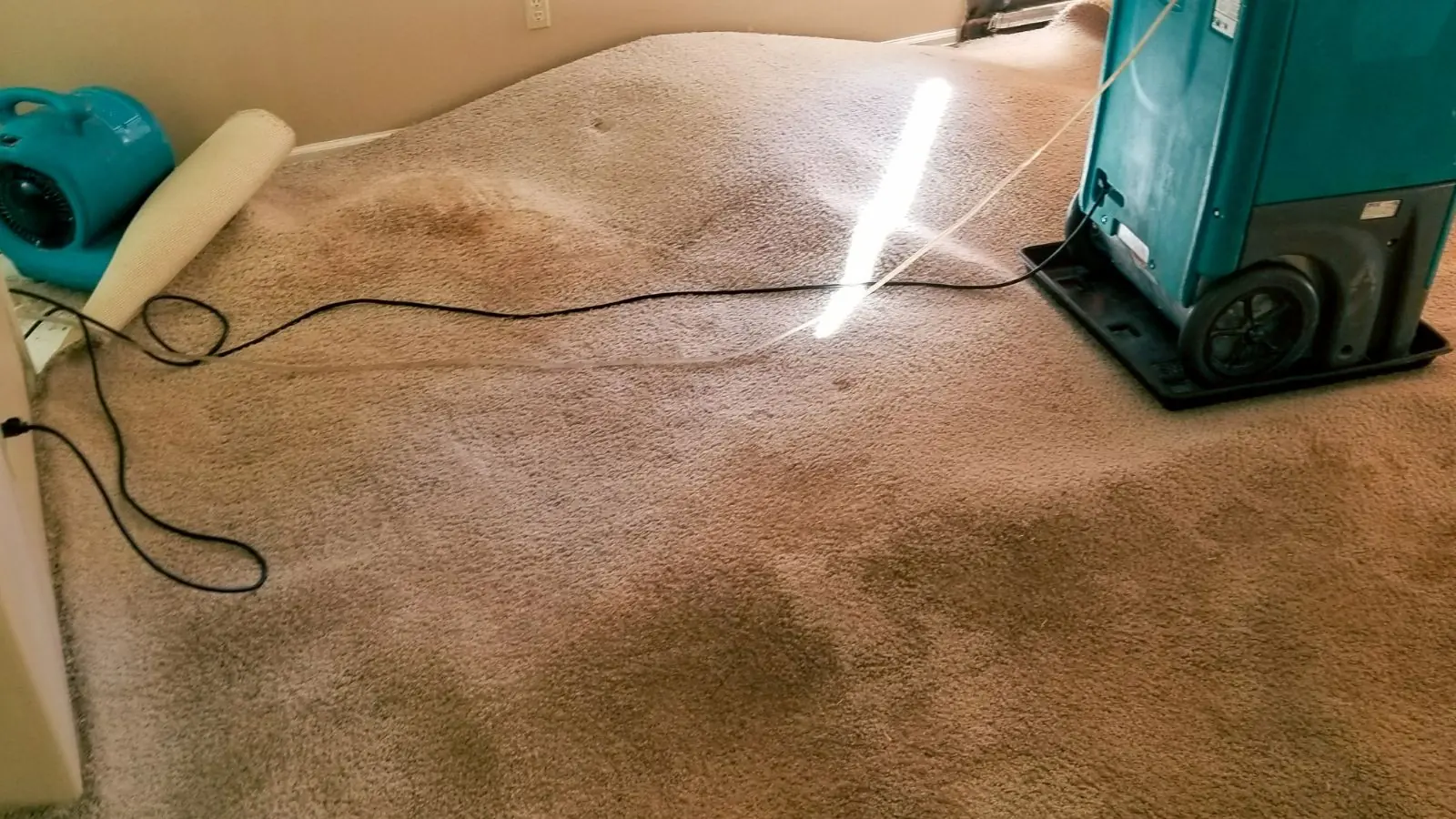
Structural drying and dehumidification in Glastonbury is the stage that removes moisture from walls, floors, ceilings and framing after water has been extracted. It includes moisture mapping, controlled airflow, dehumidification and ongoing readings, and it is often called water mitigation.
Why does a floor that feels dry still need equipment? Surface dryness does not equal dry framing. If you have just had a leak, the phone line is open 24/7 and the first questions will be about what got wet and how long ago.
Damp walls and floors: how to tell it is not over
A wall can feel dry on the surface while the inside of the cavity stays wet for days. Baseboards, the lower edge of drywall and the sill plate hold water the longest. A musty smell, bubbling paint, warped trim and floors that cup are signs moisture is still there.
This is the symptom side of drying. Once someone says water is gone but the smell or staining remains, structural drying is usually the answer.
Moisture mapping
Moisture mapping means measuring and recording moisture levels across rooms. Pin and pinless meters check wood, drywall and concrete. Thermal cameras show temperature differences that hint at wet areas. The readings are written down so progress can be compared from day to day.
The map defines the wet area, so equipment is placed where it is needed and not simply spread around a room.
Call for readings.
Equipment and what it does
Air movers
Move air across wet surfaces to speed evaporation.
LGR dehumidifiers
Pull moisture out of the air so evaporation can continue.
Moisture meters
Measure wood, drywall and concrete readings.
Thermal imaging
Highlights cool, wet areas.
Injectidry and wall systems
Move air into wall cavities when walls cannot be opened.
The drying process
- 1
Assess and map
Initial readings are taken and recorded.
- 2
Set equipment
Air movers and dehumidifiers go where the map shows moisture.
- 3
Monitor daily
Readings are compared and equipment adjusted.
- 4
Confirm dry standard
Equipment is removed only when readings match the dry standard for each material.
How long drying usually takes
Time depends on materials, water volume, humidity and equipment.
| Material | Drying behavior |
|---|---|
| Drywall | Often a few days, may need removal if saturated |
| Hardwood | Slower, may cup, see hardwood floor repair |
| Concrete | Can take longer because it holds moisture |
| Insulation | Often removed, not dried |
Water mitigation, defined
Water mitigation means stopping further damage and getting the structure dry. It comes before repair. Many problems occur when finishing and painting start before drying is done.
What affects the scope and price
The scope and price are explained before work starts.
Equipment count and days
More wet area means more equipment.
Material density
Dense materials take longer.
Building humidity
Humid conditions slow the process.
Access
Closed cavities need special methods.
Equipment rental
Equipment is placed and monitored by the crew and is not rented out. Ask plainly if you wonder why.
Why the dry standard matters
Every material has a moisture level at which it is considered dry, usually established by taking readings from an unaffected part of the same building. The crew compares the wet area against that baseline and keeps equipment running until the numbers match. This is the difference between a floor that feels dry and one that is dry.
Pulling equipment too early is the most common cause of recurring musty smells, because moisture left in framing can come back out into the room after the machines go quiet.
What homeowners can do while equipment runs
Keep doors and windows closed in the drying area so the dehumidifiers can work against a stable volume of air. Do not move or unplug the equipment, and keep children and pets from touching it. Expect the temperature to rise because the machines give off heat.
Note any new stains, smells or sounds and mention them during the daily check, because they can show that water is still moving somewhere unexpected.
Insurance note
Drying logs and moisture readings help document what was done. Ask your insurer which records they need.
Calls from nearby
The line covers 06033, 06073 and Marlborough.
Questions people ask
How long does drying take?
Often several days for building materials, and longer for dense ones. Daily readings decide.
Can I use my own fans and a household dehumidifier?
They help a little, but without meters you cannot confirm the structure is dry.
Is drying loud?
Equipment makes noise and runs continuously. The crew can explain what to expect.
Do you rent drying equipment?
No. Equipment is used on the job and monitored.
When is it safe to repaint?
After readings confirm the materials are dry.
Call the 24/7 line to start.