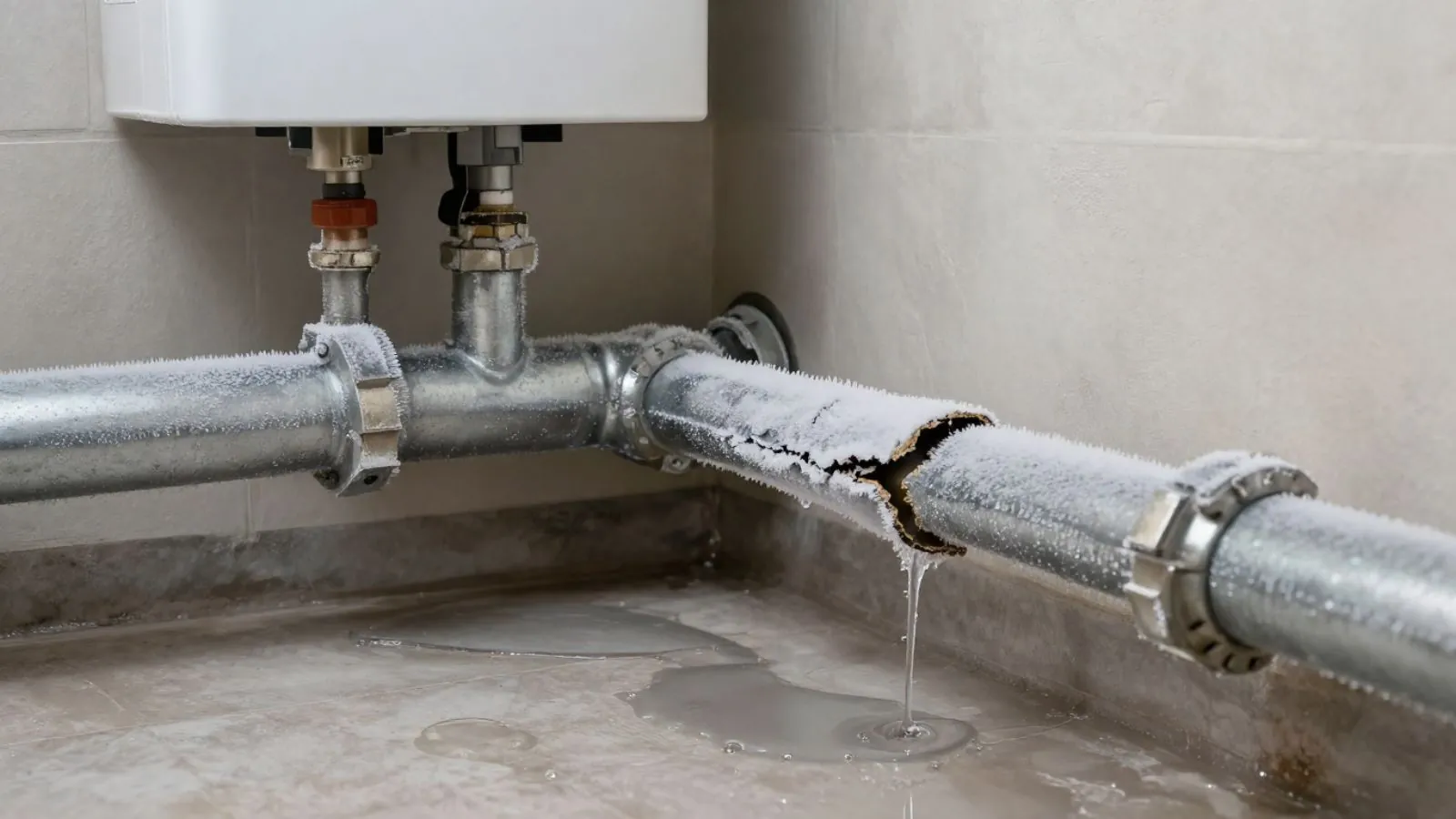
Emergency frozen pipe water damage in Glastonbury usually begins quietly. Water expands as it freezes, which can crack a pipe or loosen a joint, and the real flooding starts when the ice melts and the line is under pressure again. A hard freeze in a garage, exterior wall, attic or unheated room is the typical setup.
The phone line is open 24/7 for thaw-time leaks. If you find a split pipe, shut off the main water valve right away, keep the heat on and call. Do not use an open flame to thaw anything. If a pipe is frozen but not yet leaking, open the faucet it feeds slightly and warm the room gently while you wait for advice.
A leak after a freeze is an emergency
A cracked pipe can sit unnoticed behind drywall until the temperature rises. Then water sprays or drips into the wall cavity and travels down through the framing. By the time a stain appears, the cavity may already be saturated.
Stay alert after a cold snap ends. A sudden drop in water pressure, a hissing sound inside a wall or damp baseboard near an exterior corner are all reasons to shut off the main valve and call.
Never thaw with flame or a torch
Open flames, torches and heat guns near pipes and framing create a fire risk. A hair dryer on low heat, used by someone watching the area, is a safer way to warm an exposed frozen line while you wait for help.
Places in a Connecticut home where freezes do the damage
Exterior wall cavities
Pipes run close to cold sheathing, and insulation gaps leave them exposed.
Garages and breezeways
Supply lines to laundry and utility sinks often cross unheated space.
Attics and eaves
Pipes along roof edges are far from the home's heated core.
Basement rim areas
Lines near the foundation wall and rim joist can chill quickly.
Outdoor spigot lines
A split just inside the wall shows up as water pouring behind the siding when the faucet is used again.
Call the 24/7 line so the cavity can be checked and dried.
How a frozen pipe job is handled
The crew locates the failure, confirms the water is off and maps moisture through the walls, ceiling and floor below. Because the leak often runs inside a cavity, thermal imaging and meters guide where drywall is opened. Water is extracted, wet insulation is removed and drying equipment runs until readings return to normal.
If many rooms are involved, the process mirrors burst pipe cleanup. If the water reached a ceiling below, see ceiling water damage repair. Repairing the pipe itself is plumbing work and is a separate step.
Frozen versus burst, and what changes
Both start with shutting off the water. The differences are in what you may find.
| Situation | What you may notice | Response |
|---|---|---|
| Frozen, not yet split | Faucet runs slow or not at all | Open the tap slightly, warm the space, keep the main valve in reach |
| Split but still frozen | Little or no water, cracked pipe visible | Shut off the main valve before thawing |
| Split and thawing | Dripping, spraying or damp wall | Shut off, call, take photos |
| Joint failure after thaw | Slow leak at a fitting | Shut off, document, plan drying |
What affects the scope and price
The scope and price are explained before work starts. These items matter most on a freeze-related loss.
Discovery time
A leak caught within hours is far smaller than one found after days.
Cavity saturation
Wet insulation and wall bottoms often need removal.
Rooms below
Water that dropped through a floor adds ceilings and contents.
Occupancy
A vacant or seasonal property may have had water running unnoticed.
The standard behind the work
After a thaw, readings decide when drying is finished. The method follows ANSI/IICRC S500, which we name as a reference and not as a certification we hold.
Insurance and freeze losses
Many homeowners policies treat sudden freeze damage differently from damage that results from neglect, for example when heat was off for a long time. The wording varies, so read your policy or ask your insurer. Photographs of the split section, the thermostat setting and the wet areas help support a claim.
Calls from Glastonbury and Marlborough after a cold snap
The 24/7 line takes calls for 06033 and 06073 in Glastonbury as well as Marlborough. Frozen pipe losses in vacant or seasonal properties deserve a quick walk-through after any hard freeze, so ask a neighbor or manager to check if you are away.
Questions people ask
Do you handle frozen pipe water damage emergencies at night or on weekends in Glastonbury?
Yes. Thaw-time leaks do not follow office hours. The phone line is open 24/7 and the first step is always shutting off the water.
Can I keep using the water after a pipe has frozen?
If a pipe is frozen, avoid forcing water through it. If it has split, shut off the main valve and leave it off until the line is repaired.
How do I tell if a pipe inside a wall has split?
Common signs are a stained spot, bubbling paint, a warm or musty smell, hissing and an unexplained drop in pressure. Moisture meters can confirm it without opening everything.
Will insulation need to be replaced?
Wet insulation in a cavity usually does not dry well and is commonly removed, then replaced after the framing is dry.
Does the plumber or the restoration crew come first?
Shut off the water first. The leak must be stopped by a plumber for a permanent fix, while extraction and drying can begin as soon as the area is safe.
Call any hour. Nights and weekends are covered.