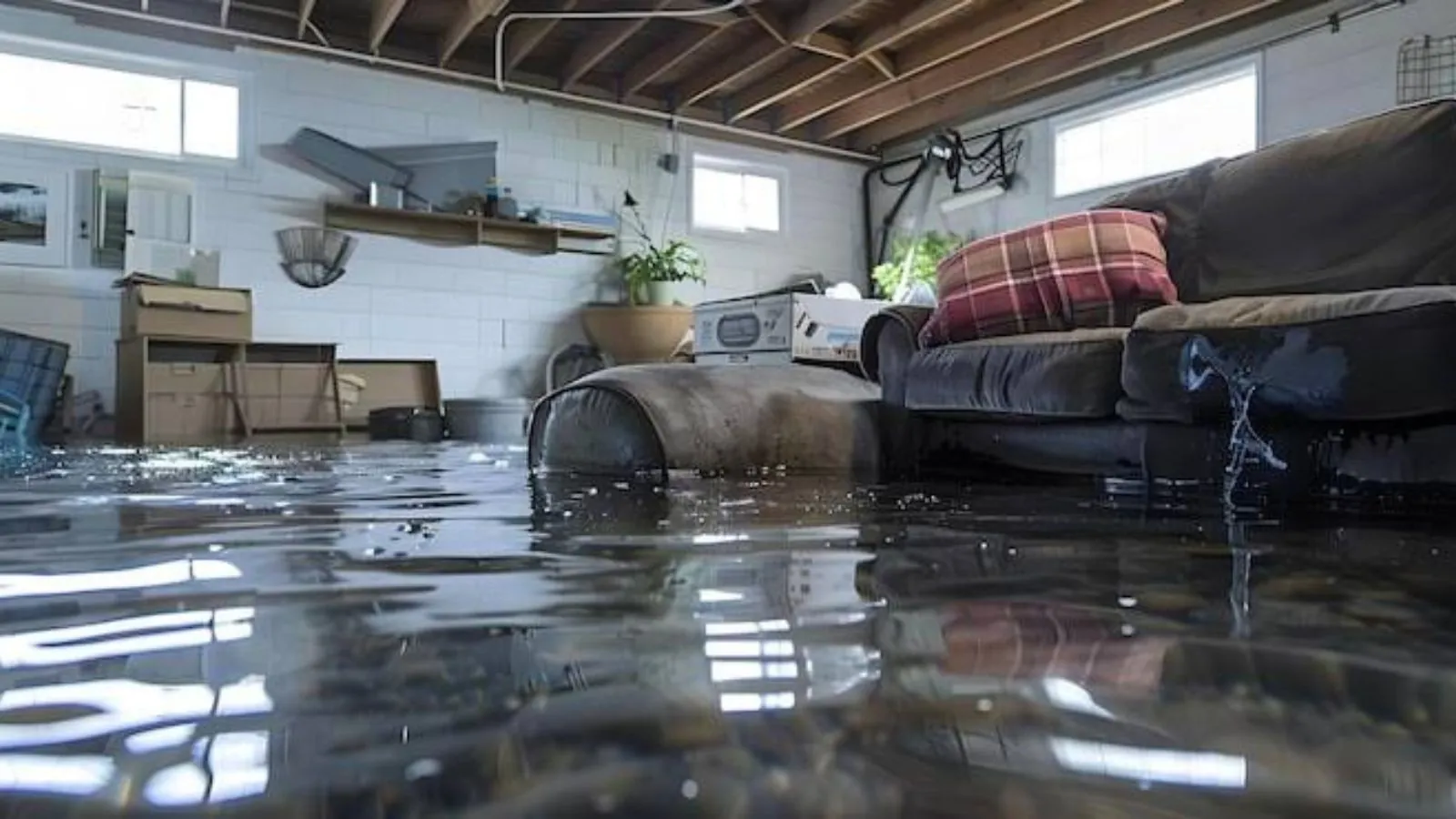
Emergency flood damage cleanup in Glastonbury covers water that enters a property from outside, such as river or brook overflow, heavy runoff or rising groundwater. This page is about that outside water, which usually brings soil, bacteria and debris with it and is treated as Category 2 or Category 3 water.
The phone line is open 24/7. If your home has flooded, stay out of the water, do not turn on electrical equipment in wet rooms and call 911 or your utility for any power or gas danger first. Photograph the water line on walls, then call so a plan for extraction, removal and drying can start.
When flooding is an emergency
Flood water carries contamination from the ground, drains and yards. Porous materials that sat in it, such as carpet, pad, insulation and some drywall, are usually removed instead of dried. Hard surfaces can often be cleaned and sanitized.
Do not run a vacuum, fan or heater in a wet area. Do not walk through water in a basement where outlets and appliances may be live. If you must leave, bring medications, documents and a phone charger.
Contaminated water changes the job
Water from outside, a sewer or a backed-up drain should be treated as Category 3 until a professional says otherwise. Keep children and pets out, wear waterproof boots and gloves and wash well after contact.
Why flooding is a real topic in Glastonbury
The Connecticut River forms the western boundary of town, and most of Glastonbury drains to it through Hubbard, Roaring, Salmon and Slab Gut Brooks, according to the regional hazard mitigation profile prepared for the Capitol Region. The town's zoning map references a FEMA Flood Insurance Study effective September 26, 2008.
That does not mean any particular street is at risk. Which parts of a property are mapped is a question for the FEMA Flood Map Service Center and the town, so check the map for your address and ask the Glastonbury Building Department what applies.
Call the line before handling wet materials.
How flood cleanup is done
- 1
Assess the water category
Source, contact time and contamination decide what is removed and what is cleaned.
- 2
Extract the water
Pumps and extraction units move it out. See water extraction for the equipment side.
- 3
Remove unsalvageable materials
Soaked pad, insulation, low drywall and contaminated contents are bagged out under safe handling.
- 4
Clean and sanitize
Surfaces that remain are cleaned and treated before drying.
- 5
Dry and verify
Air movers and dehumidifiers run with daily readings. See structural drying.
Flood water categories
A simplified view of how contamination is classified.
| Category | Typical source | Handling |
|---|---|---|
| Category 1 | Broken supply line, clean source | Dry quickly, most materials can stay |
| Category 2 | Appliance discharge, some groundwater | Clean, sanitize, porous materials often removed |
| Category 3 | River or brook overflow, sewage, long-standing water | Remove porous materials, sanitize, protect workers |
What affects the scope and price
The scope and price are explained before work starts. A written scope helps with insurance too.
Depth and duration
Hours of shallow water differ from days of deep water.
Contamination level
Category 3 handling adds protective work and disposal.
Materials affected
Finished basements with carpet and drywall add more to remove.
Size of the area
Whole-floor losses need more equipment and time.
Rebuild scope
Drywall, flooring and trim replacement is quoted after drying.
Flood insurance basics
Standard homeowners policies usually exclude flood damage, which generally needs separate flood coverage. If you are unsure which applies, ask your insurer and check your policy before assuming. The Connecticut Insurance Department publishes consumer guidance on claims.
Coverage beyond town lines
Flood calls come from across Glastonbury, including ZIPs 06033 and 06073, and from Marlborough. If water rose in a lower level, see basement water damage cleanup. Storm-driven rain through the roof or walls is covered under storm water damage.
Questions people ask
Do you handle flood damage emergencies at night or on weekends in Glastonbury?
Yes. The 24/7 line takes flood calls every night and weekend. Describe the depth of the water and whether power is on.
Is flood damage covered by homeowners insurance?
Usually not. Flood from rising or surface water is generally excluded and needs a separate flood policy. Ask your insurer about your coverage.
Can wet drywall and carpet be saved after a flood?
Carpet, pad and insulation that sat in flood water are commonly removed. Drywall depends on how high the water rose and for how long. Readings guide the decision.
Should I wait for the water to go down before calling?
No. Calling early lets planning start, and you can keep documenting while you wait. Do not enter dangerous water.
How do I check whether my property is mapped as a flood hazard?
Use the FEMA Flood Map Service Center with your address and ask the Glastonbury Building Department. We cannot tell you a flood zone over the phone.
Night, weekend or holiday, call when the water arrives.