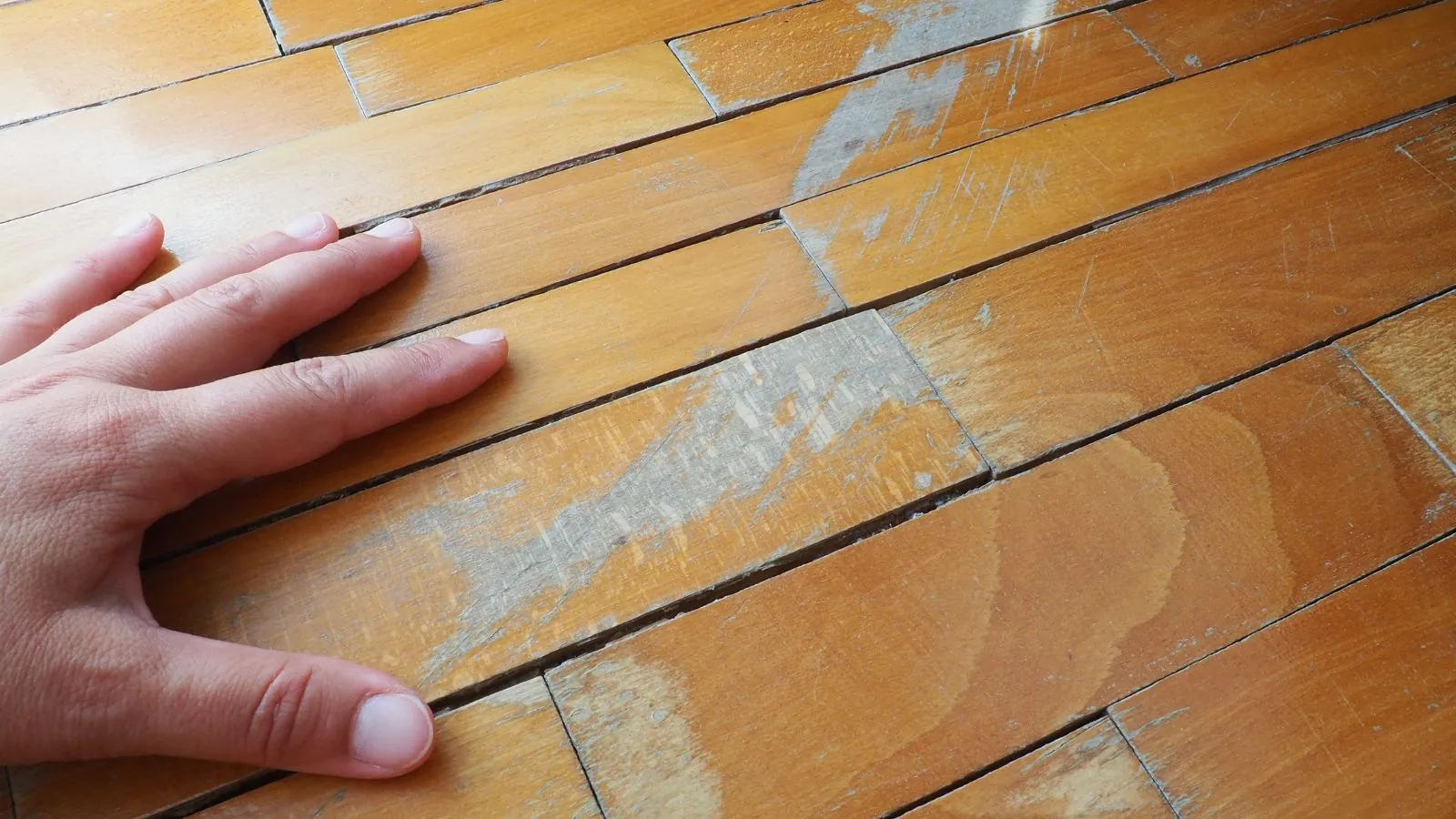
Hardwood floor water damage repair in Glastonbury deals with boards that cup, crown, buckle or stain after contact with water, whether from a washer valve, a dishwasher, an HVAC condensate line or a plumbing leak. Laminate and engineered wood respond in similar ways, though their layers behave differently.
Wood is hygroscopic, which means it takes on and gives off moisture with the air around it. When boards get wet they swell, and the edges may rise into a cup shape as the bottom stays wetter than the top. Drying them too quickly can split them, and drying them too slowly invites mold underneath, which is why a measured approach is used.
What cupping tells you
Cupping means the edges of each board are higher than the center. It usually shows up within days of a moisture event and often means water is trapped beneath the floor. A floor that cups after a slow leak under a dishwasher or from a condensate line is typically wetter underneath than it looks on top.
Crowning is the opposite, where the center is higher, and it often appears after sanding a cupped floor that was not fully dry. Buckling, where boards lift off the subfloor, is a more severe sign.
Why drying wood is a controlled process
- 1
Find the wet area with meters
Moisture meters compare the wet boards to a dry reference.
- 2
Remove surface water
Extraction pulls standing water off the surface.
- 3
Create airflow and low humidity
Air movers and dehumidifiers pull moisture out gradually.
- 4
Dry from below when needed
Some systems dry the subfloor cavity through small holes or removed boards.
- 5
Monitor and wait
Boards are checked until they stabilize, and sanding or repair comes after.
Call early so more boards have a chance.
Hardwood, laminate and engineered flooring compared
| Floor type | How water affects it | Common outcome |
|---|---|---|
| Solid hardwood | Swells, cups, may crown | Often dries and can be refinished, severe cases need replacement |
| Engineered wood | Layers can delaminate | Mild cases dry, severe cases are replaced |
| Laminate | Core swells at edges | Often replaced if the core has swelled |
| Vinyl plank over subfloor | Water hides below | Subfloor check needed |
When boards can be saved
Early drying, clean water and limited exposure improve the odds. Long exposure, contaminated water or finish failure reduce them. A floor can look worse right after drying than it will once it settles, so decisions about replacement should wait for stable readings.
If the leak started in an appliance, see appliance leak water damage. For wet subfloor drying details, see structural drying.
What affects the scope and price
The scope and price are explained before work starts.
Floor species and thickness
Solid and engineered boards dry differently.
Duration of wetness
Days of exposure mean deeper moisture.
Subfloor condition
Wet subfloor adds drying time.
Finish work
Sanding and refinishing come after drying.
Common causes of wood floor water damage
Dishwasher leaks, washer valve failures, refrigerator lines and HVAC condensate backups are frequent causes, because each sends water along a floor and under planks without much notice. Plumbing leaks in walls can also wick water into the end grain at the baseboard.
Basement and crawl space humidity can push moisture upward into boards from below, and spills left in place can seep between planks. Telling the crew what happened and when helps them decide where to look first.
What to do in the first day
Remove standing water and wipe the surface, lift rugs and furniture, and keep the area ventilated without blasting hot air across the floor. Do not use heat guns or space heaters on wood. Take photos of the boards before any change in shape.
Avoid covering the floor with plastic, since trapped moisture can make cupping worse. Call so moisture readings can guide the next steps.
The standard behind the work
Wood is dried slowly and checked often. The approach follows ANSI/IICRC S500, a published standard that we cite as the reference for drying and monitoring.
Insurance note
Sudden leaks that damage flooring may be covered, but slow seepage often is not. Ask your insurer and keep photos of the boards and moisture readings from the start.
Serving Glastonbury and Marlborough
Calls from 06033, 06073 and Marlborough reach the same 24/7 phone line. Many older Connecticut homes have original wood floors over a basement or crawl space, which can add moisture from below.
Questions people ask
Can cupped hardwood go back to flat?
Often yes after careful drying, though some boards remain distorted. Wait for stable readings before sanding.
Should I sand right away?
No. Sanding a floor that is not fully dry can lead to crowning. Wait for readings.
Is a wet laminate floor ruined?
Often the edges swell and it must be replaced, though prompt drying helps in mild cases.
How long does drying take?
Usually several days to a few weeks for solid wood, depending on thickness and conditions.
Do you refinish floors?
Refinishing and repair follow drying and are part of the rebuild scope.
Call the 24/7 phone line.