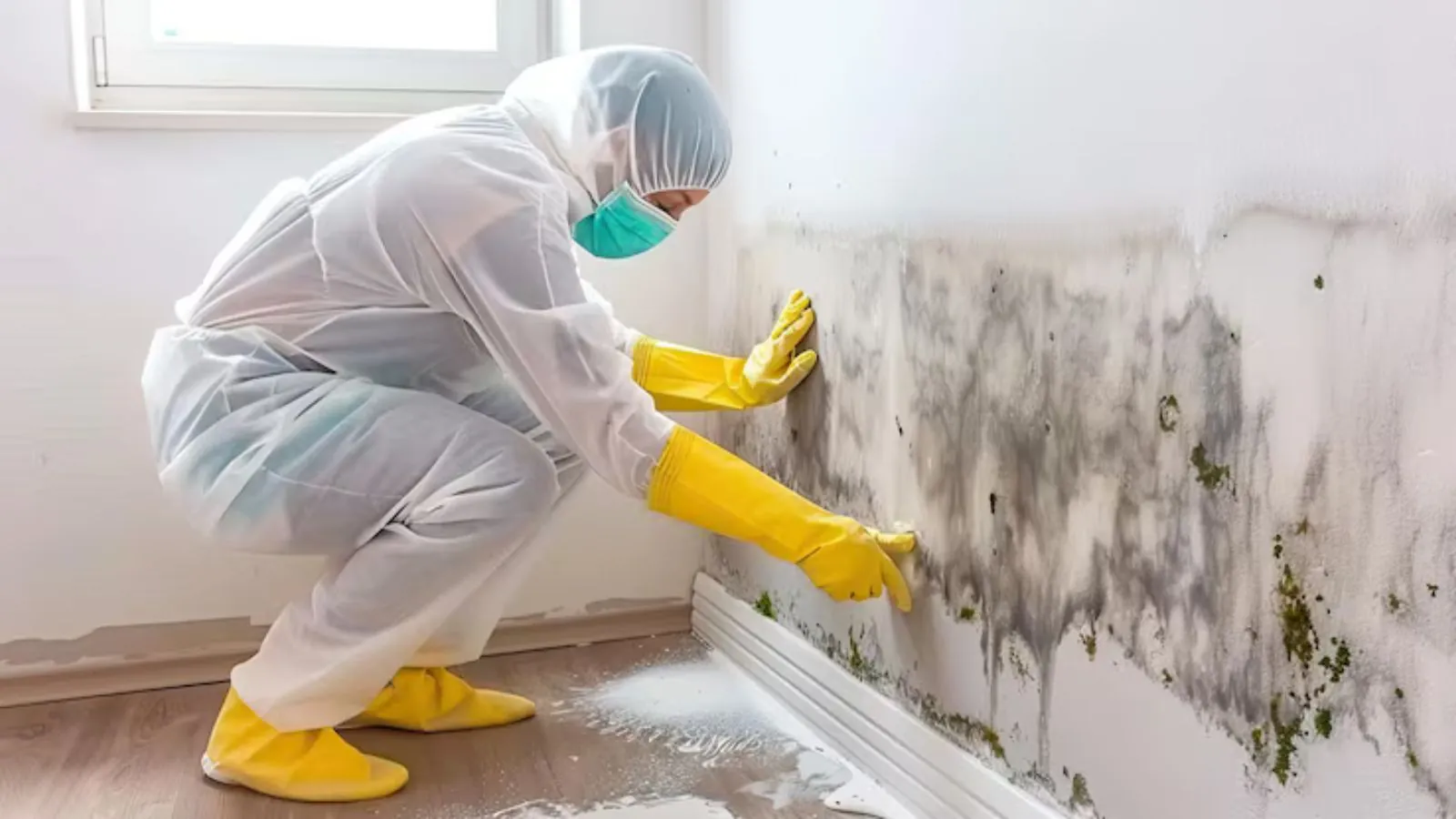
Mold remediation in Glastonbury means removing or cleaning mold growth from building materials after moisture has allowed it to grow. It follows water damage far more often than it appears alone, so the first question is always where the moisture came from and whether it has been fixed.
ANSI/IICRC S520 is the published industry standard for professional mold remediation. Ask any company whether its crews work to it. This page covers the process in plain terms. It makes no health claims, and questions about symptoms belong with a physician.
Spotting the problem: stains, smells and fuzzy patches
People usually search for mold by what they see. A dark patch on a ceiling corner, a musty smell in a closet, spotting on drywall behind furniture or growth under lifted carpet are the common starting points. Mold often shows up after a leak that was not fully dried.
Seeing or smelling it means moisture is probably still present somewhere. The next step is finding the source and getting an assessment of how far it has spread.
Moisture first, then mold
Mold remediation without fixing the water source is a repeat job. The leak is repaired, the area is dried, and then the contaminated material is cleaned or removed. Drying methods are described under structural drying.
Common sources include slow plumbing leaks, condensate lines, roof leaks and unattended wet materials. See AC leak water damage and carpet water damage for two frequent examples.
Call to start with the source.
How remediation is done
- 1
Assess
Find the extent and the moisture source.
- 2
Contain
Plastic barriers and negative air keep spores in one area.
- 3
Remove or clean
Porous materials with growth are removed, others cleaned.
- 4
Filter the air
HEPA filtration captures airborne particles.
- 5
Verify and dry
Readings confirm dryness and testing may follow.
Testing and clearance
Testing can show what types and amounts of mold are present, and clearance testing after cleanup checks whether the work achieved its goal. Independent testers, not the remediation company, are often preferred for clearance so the result is unbiased.
If you are in a home sale or loan situation where a lender or buyer requires mold removal, ask what documentation they require. No promise can be made about what a lender will accept.
Mold situations compared
| Situation | Typical approach |
|---|---|
| Small surface growth on a hard surface | Cleaning with protection |
| Growth on drywall or insulation | Removal of affected material |
| Hidden growth in a wall | Open, assess, remove |
| Growth in a HVAC system | Specialist cleaning |
| Growth after long-term water | Containment and removal |
What affects the scope and price
The scope and price are explained before work starts.
Size of the area
Larger growth needs more containment.
Materials
Porous materials are removed more.
Source repair
Water must be fixed first.
Testing
Added testing adds steps.
What homeowners can do before help arrives
Fix or shut off the water source if you can, and keep the area closed off. Avoid sweeping, fanning or dry-brushing visible growth, which can spread particles. Take photos and note the date you first saw it, and keep wet materials that were removed if an adjuster wants to see them.
Open windows in unaffected rooms only if the weather allows, and avoid running the HVAC fan through the affected area.
Questions to ask any remediation company
Ask how containment will be set up, whether the crew works to the ANSI/IICRC S520 standard and how the moisture source will be handled. Ask what is removed and what is cleaned, and what documentation you will receive.
Ask who will perform any testing, and whether clearance testing is separate from the remediation work. A clear written scope is a good sign.
Insurance and licensing
Mold coverage varies widely, so ask your insurer. Ask if your state licenses mold work, since rules differ.
Calls from nearby
The line covers 06033, 06073 and Marlborough. For wet walls, see wall and drywall repair.
Questions people ask
Is all black mold dangerous?
Color alone does not tell you. Health questions belong with a physician. Treat any growth with care and fix the moisture.
Can I clean mold myself?
Small areas on hard surfaces can be cleaned with protection. Larger growth should be handled by trained crews.
Do I need testing?
Not always. A professional assessment can say whether it helps.
What if my buyer or lender wants mold removed?
Ask what documents they need. We cannot promise what they will accept.
Will mold come back?
It needs moisture. Controlling moisture lowers the chance, but outcomes are not promised.
Call the 24/7 phone line.