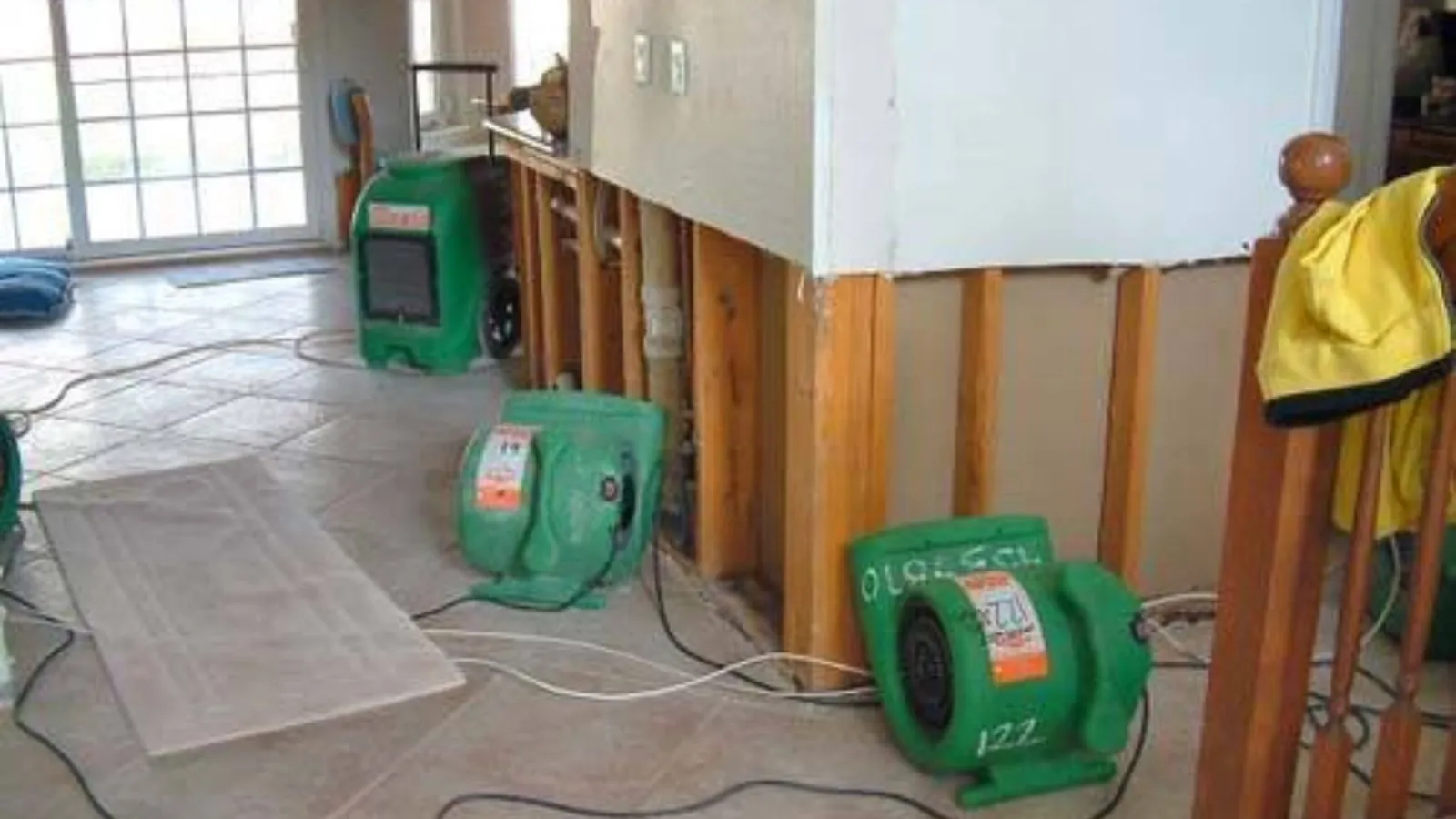
Wall and drywall water damage repair in Glastonbury covers wet drywall, sheetrock, plaster, baseboards and the framing behind them after a leak. Drywall absorbs water quickly and holds it, and the paper facing is a food source for mold, so wet walls should be checked soon after a leak.
The phone line is open 24/7 if you find a wet wall. If water is running from a wall or an outlet, shut off the main valve, avoid touching switches and call 911 or an electrician for any electrical risk. Then call us to assess how far the water traveled.
Signs a wall is wet inside
Bubbling or peeling paint, a soft area when pressed, a musty smell, a swollen baseboard and a stain at the lower edge are common. Water wicks upward from the floor, so damage often rises several inches above the visible line.
A wall below a bathroom or beside a kitchen can also be wet from pipes inside the cavity.
Checking before cutting
Moisture meters and thermal imaging show wet areas without opening everything. Small inspection holes can confirm what is inside. Sometimes only the bottom strip of drywall needs to be removed, a flood cut, to let the cavity dry. In other cases, saturated insulation must come out too.
For ceiling issues above the wall, see ceiling water damage repair.
Call for a reading.
From wet wall to finished wall
- 1
Find the source
Plumbing or roof leaks are stopped.
- 2
Open as little as needed
Flood cuts and inspection holes.
- 3
Dry the cavity
Air movers and dehumidifiers.
- 4
Replace what cannot dry
Drywall, insulation, baseboard.
- 5
Finish
Tape, texture, prime, paint.
Wall materials and water
| Material | Response | Outcome |
|---|---|---|
| Painted drywall | Wicks and softens | Often cut at base |
| Plaster | Dries slowly | Often saved if intact |
| Baseboard | Swells | Often replaced |
| Insulation | Holds water | Often removed |
Why drying before painting matters
Paint over a wet wall can trap moisture and fail within weeks. Waiting for readings may feel slow, but it avoids repeating the job. If you see growth on the wall, see mold remediation.
What affects the scope and price
The scope and price are explained before work starts.
Height and extent
How far water wicked.
Wall construction
Drywall or plaster.
Insulation
Present or not.
Finish
Paint, wallpaper, tile.
Baseboards, outlets and what is inside the wall
Baseboards soak water at the bottom edge, and the gap behind them can trap moisture. Electrical outlets and switch boxes in a wet wall are a hazard, so have an electrician check them if water reached that height. Wall insulation, especially fiberglass, holds water and can pull it upward.
Plaster walls in older homes dry differently from modern drywall and may need slower, more careful drying to avoid cracking.
When water came from above or below
Water in a wall often traces back to a pipe inside it, a roof or window opening, or a wet floor beside it. A stain near the top of a wall suggests a source above, while a damp bottom edge suggests water from the floor or a pipe low in the cavity.
Knowing which direction the water came from guides where the crew opens the wall, and it helps your plumber or roofer find the source.
Keeping the repair scope small
Opening a wall in sections lets the crew check each bay and stop where the readings are normal. Using inspection holes before cutting saves drywall, tape and paint work later.
A written scope that separates drying from replacement lets you approve the stages one at a time and see where money is going.
Safety and the standard behind the work
Wet drywall is heavy, and the wiring inside a wet wall can still be live. Do not cut into a wet wall yourself. Removal and drying follow the practices in ANSI/IICRC S500, a published standard.
- 1
Switch off the wall circuit
Do this before anyone presses on a wet wall.
- 2
Mark the wet edge
Use a pencil so readings can be compared later.
- 3
Leave the cut to a crew
Hidden pipes and wires make guesswork risky.
Insurance note
Sudden leaks may be covered, long-term seepage often is not. Ask your insurer.
Serving the area
Calls from 06033, 06073 and Marlborough reach the same line. Wall damage from a pipe is related to burst pipe water damage.
Questions people ask
Does all wet drywall have to be replaced?
Not always. Readings and water category decide.
What is a flood cut?
Removing the bottom strip of wet drywall to dry the cavity.
Can I paint over a stain?
Not safely until the wall is dry.
How do I know if there is mold?
Odor and visible growth are clues. Testing may help.
How long until the wall is repaired?
After drying, repair follows. Timing varies.
Call the 24/7 phone line.