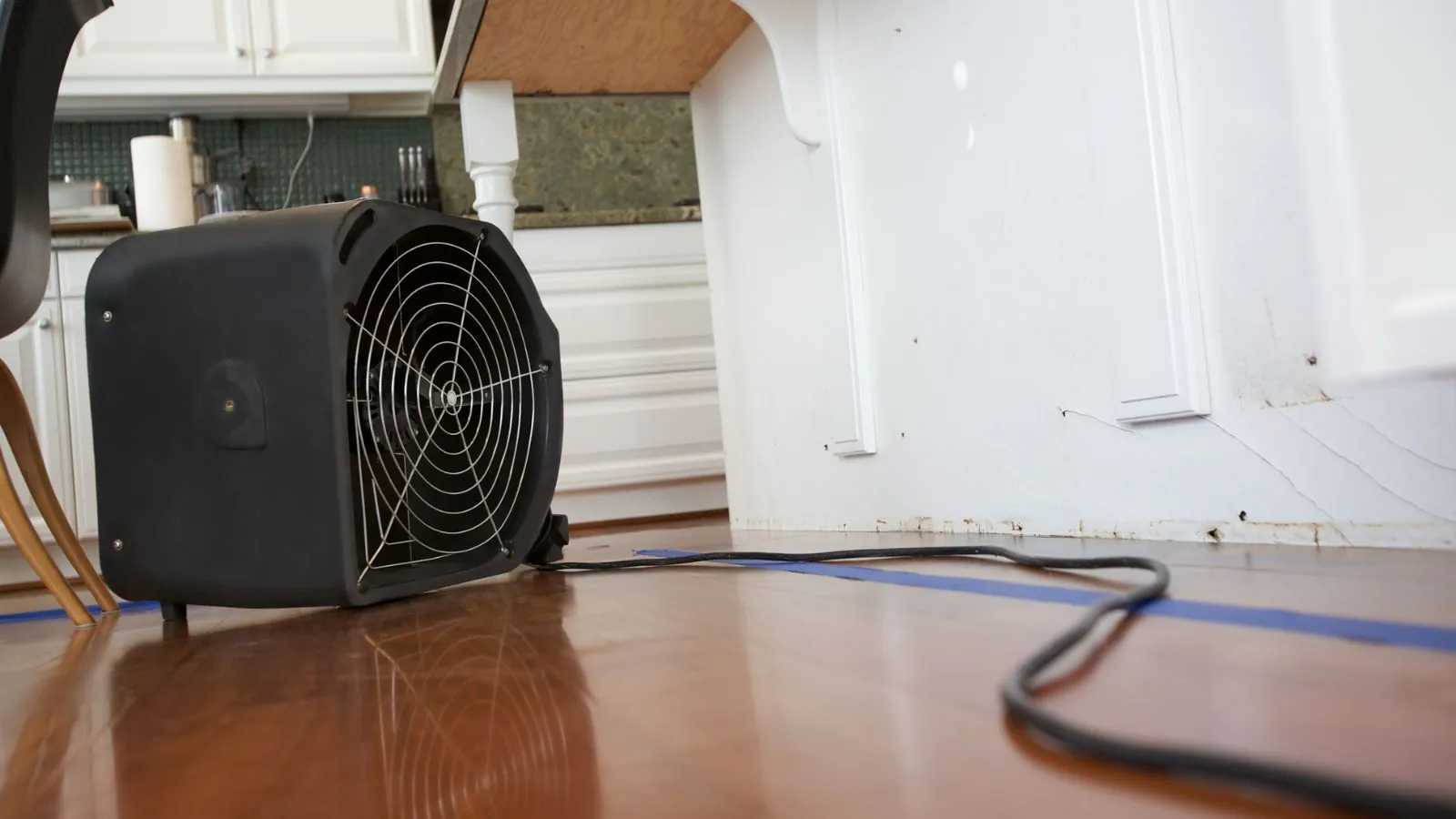
Kitchen water damage restoration in Glastonbury covers wet cabinets, floors, walls and subfloor in the kitchen, whether the leak came from a sink, dishwasher, refrigerator line or supply pipe. Kitchens combine plumbing, appliances and finished materials in a small space, so a leak spreads quickly.
The phone line is open 24/7. If you find water, shut off the valve under the sink, unplug appliances only if safe and photograph the damage. Then call for a moisture check before cabinets or floors are removed.
Under the sink and behind the cabinet
The space under a sink is full of connections that can fail. A drain slip nut, a supply line or a garbage disposal can leak a little at a time. Water collects in the cabinet base, soaks into the floor and travels along the wall.
Particleboard cabinets swell and soften when wet. Solid wood and plywood handle moisture better but can still warp.
What a kitchen moisture check covers
Cabinet base and toe kick
Where water often collects first.
Subfloor under the cabinets
Often damp when the surface is dry.
Wall behind the sink
Water wicks up drywall.
Floor under the dishwasher
A hidden leak spot.
Call for readings.
Cleanup and repair stages
- 1
Stop the water
Valves are closed and the source is identified.
- 2
Extract and open
Wet areas are opened, toe kicks removed.
- 3
Dry
Air movers and dehumidifiers run.
- 4
Remove ruined materials
Swollen cabinet parts and flooring.
- 5
Rebuild
Cabinet and floor repairs follow drying.
Kitchen materials and water
| Material | How it responds | Likely outcome |
|---|---|---|
| Particleboard cabinet base | Swells and softens | Often replaced |
| Plywood cabinet | May dry | Often saved |
| Vinyl or tile floor | Hides water below | Check subfloor |
| Drywall | Wicks up | Cut at base if needed |
What affects the scope and price
The scope and price are explained before work starts.
Leak duration
Weeks mean more hidden damage.
Cabinet material
Particleboard often must be replaced.
Flooring
Floor type matters.
What to check yourself before calling
Open the cabinet under the sink and look for water stains, rust on pipe connections and a swollen cabinet floor. Run the water briefly and watch the connections for drips. Check the floor in front of the dishwasher for soft spots, and look behind the refrigerator for dampness.
These checks do not replace a moisture reading, but they help you describe the problem accurately when you call.
When cabinets must come out
Cabinets are usually removed only when readings show water trapped behind them or when the material has swollen beyond repair. Often, removing just the toe kick or a base panel gives enough access to dry the space.
This approach keeps repair scope smaller, and it is one reason a moisture reading comes before a demolition decision.
Hidden kitchen leak spots to mention on the call
Mention if the dishwasher drain loops through the sink cabinet, if the refrigerator has an ice maker line and whether the sink has a disposal and a filter faucet. Each adds connections where leaks begin. Tell the crew whether the cabinets are particleboard or plywood and what the flooring is.
Those details help the crew bring the right tools and plan access without guessing.
Refrigerator and ice maker lines
A refrigerator with an ice maker or water dispenser has a small supply line behind it. When that line cracks or loosens it leaks quietly, and the water may run under the floor for months before cabinets stain. Pulling the unit out carefully and checking the floor behind it is a good habit once a year.
If the floor is soft there, stop using the line and have it checked. Moisture readings can then show how far the water traveled.
Safety and the standard behind the work
Kitchens mix water, outlets and heavy appliances. Shut off the supply and the circuit for any wet outlet before anything else. Cabinet and floor drying follow ANSI/IICRC S500, cited here as a reference.
- 1
Cut the circuit
Switch off the breaker for wet outlets and the dishwasher.
- 2
Empty the lower cabinets
Move food and chemicals to a dry spot.
- 3
Keep the cabinet toe kicks
They show how far water traveled.
Insurance note
Sudden pipe or appliance leaks are often covered, while slow leaks often are not. Ask your insurer and keep the failed part.
Calls and coverage
The line covers 06033, 06073 and Marlborough. A burst line under a sink can also be a burst pipe job.
Questions people ask
Can kitchen cabinets be saved after a leak?
Plywood and solid wood may dry, while swollen particleboard often must be replaced.
Do I have to remove the floor?
Not always. Moisture readings decide.
Is a small sink leak urgent?
Yes. Hidden moisture can spread. The line is open 24/7.
Do you install new cabinets?
Restoration covers repair and rebuild scope after drying.
Can I keep cooking?
Use judgment and stay safe near wet areas.
The 24/7 line is open.