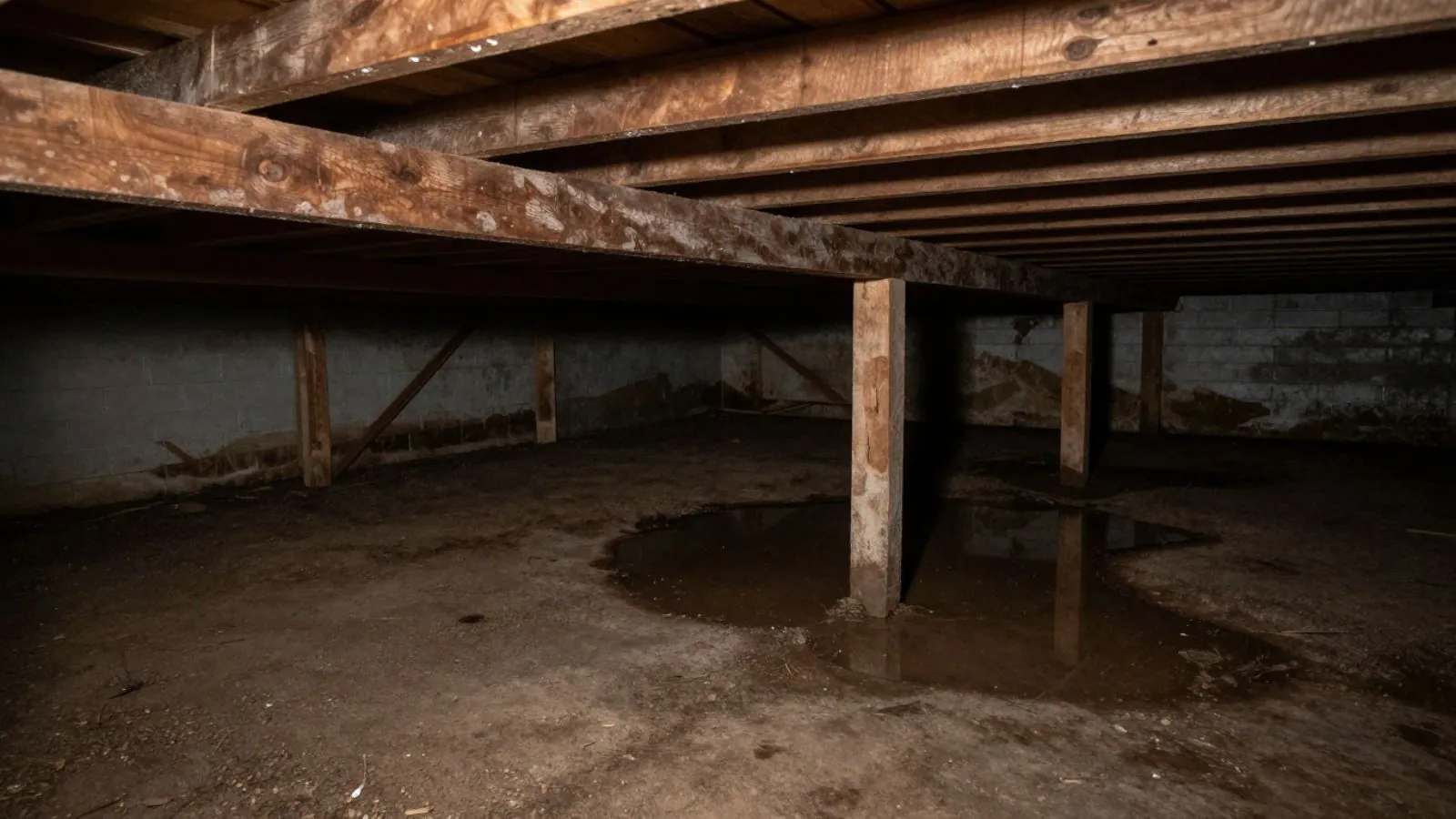
Crawl space water damage in Glastonbury covers standing or lingering water under a home, wet insulation, soaked vapor barriers and damp framing. The void is dark and cramped, so problems are often found late, by a musty smell or a spongy floor above.
Not every home has a crawl space, and many here have basements instead, so confirm your foundation type first. If water is in yours, keep out of the space if the electrical equipment is wet, and call the 24/7 line. A damp crawl space left alone can feed mold and affect floors above.
Why water enters a crawl space
Surface water and runoff
Rain and snowmelt move toward the foundation.
Groundwater
A high water table pushes in from below.
Plumbing leaks
Supply and drain lines run through the space.
Irrigation backflow
Lawn systems can leak or backflow near the foundation.
Vent and drainage failures
Crawl space vents and drains can let water in.
What water does down there
Insulation sags and loses value when wet. Vapor barriers can pool water. Joists and subfloor can hold moisture and, over time, support mold. The air in a crawl space often moves into living space, so odors travel.
Because the space is tight, access shapes what equipment can be used.
Call to start pumping.
The crawl space process
- 1
Find the source
Plumbing leaks and water entry points are located.
- 2
Remove standing water
Small pumps handle the water. See water extraction.
- 3
Remove wet insulation
Sagging insulation is pulled and bagged.
- 4
Dry and monitor
Dehumidifiers and air movers run with readings.
- 5
Assess for mold
See mold remediation if growth is found.
Crawl space issues compared
| Condition | Likely cause | Action |
|---|---|---|
| Standing water | Runoff, groundwater, leak | Pump, find source |
| Damp insulation | Humidity or leak | Replace, dry |
| Musty smell upstairs | Moisture below | Inspect |
| Sagging floor | Wet joists | Call |
What affects the scope and price
The scope and price are explained before work starts.
Access size
Tight entrances slow work.
Water depth
Standing water takes more pumping.
Insulation amount
More wet material means more removal.
Mold presence
Growth changes the work.
Signals that something is wrong below the floor
Floors that feel soft or bouncy, doors that stick, a damp smell in the winter and a sudden rise in indoor humidity are all possible signs of crawl space moisture. Insects and rodents also appear more often where it stays damp.
None of these proves water is present, but a quick look with a flashlight from the access hatch, with power off if anything electrical is wet, can tell you whether standing water or damp insulation is visible.
Humidity and the vapor barrier
Many crawl spaces have a plastic vapor barrier on the ground meant to slow moisture from the soil. When water pools on top of it or it tears, it stops doing its job. Dehumidifiers can lower the humidity during drying, but they are not a permanent fix for a leak or drainage problem.
After drying, the long-term question is whether the space needs drainage, grading or a plumbing repair, and those are decisions for the appropriate trade.
Working in a tight space
Crawl spaces limit equipment size and the amount of material that can be moved at once. Workers use small pumps, lights and protective clothing, and may need to remove pieces of insulation in small sections. This is why the scope is explained before work starts, so the plan reflects the real access.
If the entrance is blocked, the crew will explain what has to be moved first.
Safety and the standard behind the work
A crawl space is a confined, dark area with wiring, pipes and sometimes pests. Do not enter one with standing water and live electrical items. Work there follows the drying principles in ANSI/IICRC S500.
- 1
Stay out if power is present
Wet wiring in a crawl space is a shock risk.
- 2
Look from the access door
Use a flashlight and take photos from outside.
- 3
Note odors and pests
Tell us what you see when you call.
Insurance note
Groundwater and surface flooding are often excluded, while a plumbing leak may be covered. Ask your insurer.
Coverage
We take calls from 06033, 06073 and Marlborough.
Questions people ask
Is crawl space water an emergency?
If it is deep or tied to a plumbing leak, yes. The line is open 24/7.
Can you waterproof a crawl space?
No. Waterproofing and drainage are different trades. We handle water damage restoration.
Should I enter a flooded crawl space?
Only if power is off and the space is safe. Otherwise, wait for help.
Will insulation be replaced?
Wet insulation is commonly removed and replaced after drying.
Will drying prevent mold?
Drying removes the moisture mold needs, but it cannot promise a specific outcome. A professional assessment is the way to know.
Call the 24/7 phone line.