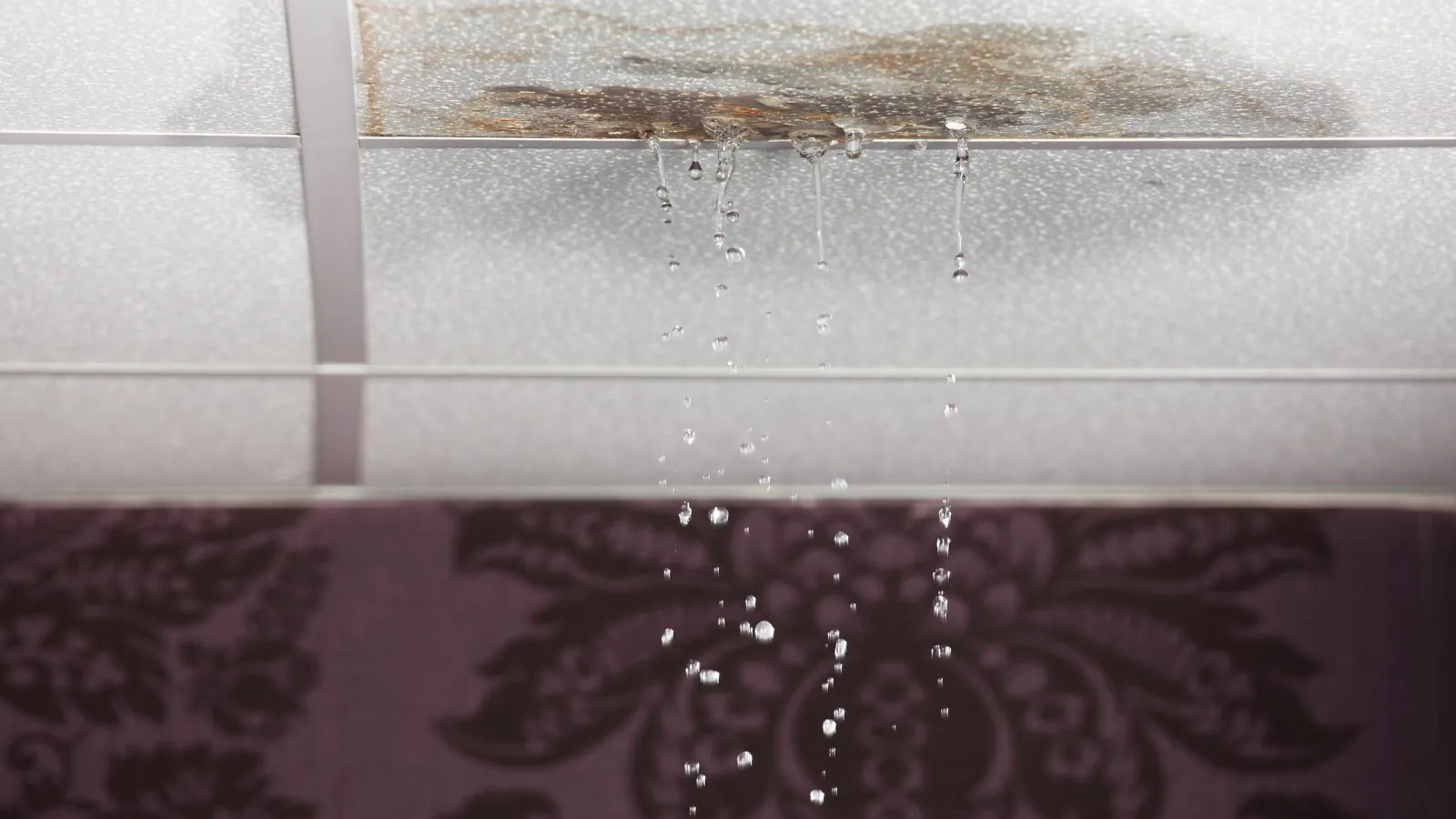
Emergency commercial water damage restoration in Glastonbury covers shops, offices, restaurants, multi-unit buildings and other non-residential spaces. These losses often involve larger floor areas, shared walls and business interruption, so planning and documentation matter as much as extraction.
The phone line is open 24/7. If a pipe, sprinkler line, roof or drain fails in your building, shut off water to the area, protect inventory and electronics, and call. Identify the building owner or manager, since leases decide who handles what.
When a commercial loss is an emergency
A leak over a sales floor, server room or storage area can damage inventory and equipment within hours. A failure in a multi-tenant building may reach units you have never seen.
If water is near electrical gear or fire panels, keep people out and call 911 or the utility first.
Protect people and equipment first
Move staff and customers out of wet areas. Cut power to affected circuits only if you can do so safely.
What makes commercial jobs different
Larger footprints
More floor area means more extraction and drying equipment.
Business hours
Work may be planned around opening times.
Shared buildings
Water often crosses tenant lines, so owners, tenants and insurers all need records.
Specialized finishes
Commercial flooring and ceiling tiles behave differently.
Call now.
Downtime and documentation
The faster a space is dry, the faster it can reopen. Moisture logs, photos and an itemized scope help support business interruption and property claims.
Ask for daily reports so you know what stage the job is in and what comes next. See structural drying for how readings guide the finish.
Typical commercial scenarios
| Scenario | Common issue | Priority |
|---|---|---|
| Restaurant kitchen leak | Wet floors, equipment | Safety, hygiene, then drying |
| Retail roof leak | Ceiling tiles, stock | Protect inventory |
| Office supply line | Carpet, desks | Reopen workspace |
| Multi-unit pipe failure | Several units | Coordinate owners and insurers |
| Vacant property loss | Long-running water | Assess and document |
What affects the scope and price
The scope and price are explained before work starts.
Square footage
Larger areas need more equipment.
Contamination
Category 2 or 3 water changes handling.
Contents
Inventory and equipment add handling.
Occupancy and access
Working around tenants takes planning.
Questions owners and managers should ask
Ask who is responsible for the building systems, because the owner, a tenant or a management company may each control different parts. Ask for a written scope that separates drying, removal and rebuild so each can be tracked, and ask how daily progress will be reported.
If the space serves the public, ask when it can safely reopen and whether any areas can stay open while others are dried. Clear answers early save arguments later.
Preparing for a loss before one happens
Know where the main water shutoff and sprinkler control valves are, and keep that information with building staff. Keep a basic list of critical equipment and inventory that should be moved first. Photograph the property in normal condition so a before-and-after comparison is possible.
These small steps do not prevent a leak, but they shorten the first hour after one, when the most can be saved.
Vacant buildings and large unseen losses
A vacant space can leak for days before anyone enters it, and the volume of water can be large by the time it is found. In those cases the first job is documenting the building as found, since insurers will ask how long the water ran and what condition the property was in.
A property manager who walks vacant units after storms or cold snaps often catches problems sooner, and a short checklist for those walks is worth keeping.
Safety and the standard behind the work
Commercial losses involve more people and more systems. Occupants should be kept out of wet areas, and shared power or alarm panels should be checked before equipment runs. Our drying plans reference ANSI/IICRC S500 as the industry standard.
- 1
Secure the area
Restrict access to wet and electrified spaces.
- 2
Notify the property manager
Tenants and owners need the same information.
- 3
Record the loss
Photograph units and common areas separately.
Insurance note
Commercial policies vary widely. Ask your insurer and your property manager what is covered, and keep detailed records. Large and vacant-property losses especially benefit from clear documentation.
Commercial calls in Glastonbury and nearby
The line covers 06033, 06073 and Marlborough. The Glastonbury Center area mixes older buildings, shops and apartments.
Questions people ask
Do you handle commercial water damage emergencies at night or on weekends in Glastonbury?
Yes. The line is open 24/7, including for after-hours leaks in businesses.
Do you work in occupied buildings?
Work can be planned around occupants where it is safe.
Do you handle multi-unit buildings?
Yes. Records for each unit help owners and insurers.
Do you handle fire or smoke damage?
No. This service is water damage restoration only.
How long until we can reopen?
It depends on the scope and readings.
The line is open 24/7.