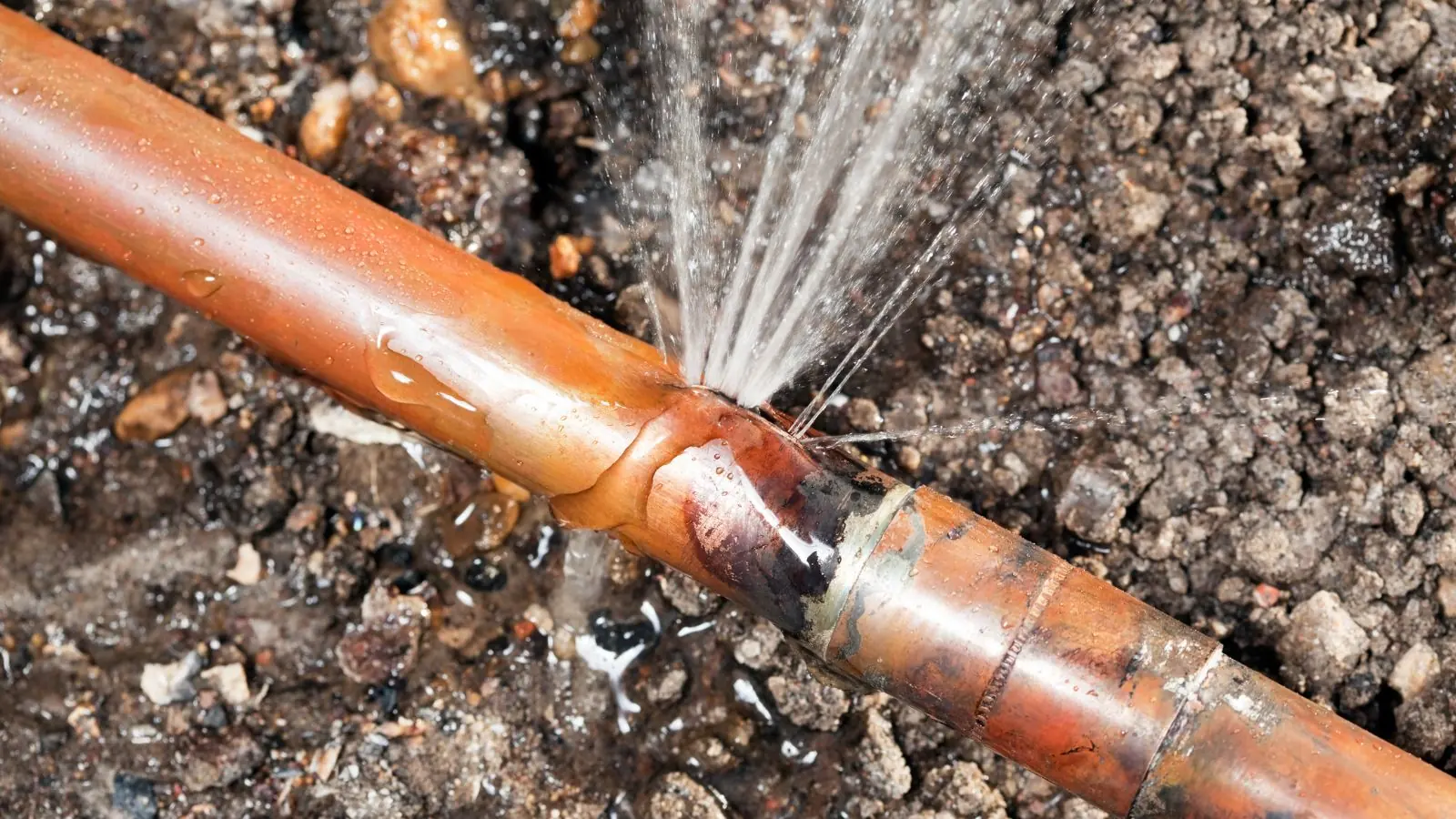
Emergency burst pipe water damage in Glastonbury starts with a pressurized supply line that has split or separated, soaking floors, walls and ceilings below it. Unlike a slow drain leak, a burst line can release a large volume of water quickly, which is why the first minute matters more than the first hour.
The phone line is open 24/7. Before you dial, find the main shutoff valve, usually where the water line enters the home near the meter or the water heater, and turn it fully off. Then open one faucet on the bottom floor to drain what remains in the lines. If water is near electrical outlets or a panel, stay out and call 911 or your utility first.
What to do in the first few minutes of a burst pipe
- 1
Shut off the main valve
Turn it clockwise until it stops. If it is stuck or under water you cannot safely reach, call the water utility and the 24/7 line.
- 2
Protect the electrical system
If the water is near outlets, a panel or appliances, do not touch them. Cut power only from a dry position.
- 3
Move what you can
Lift rugs, electronics, books and furniture legs off wet floors to stop staining and swelling.
- 4
Take photos and video
Capture the pipe, the wet areas and damaged items before anything is moved. This supports an insurance claim.
- 5
Call the line
Describe the rooms affected and which floor the pipe is on. Water travels down through floors, so the ceiling below matters.
Where burst pipes cause the most damage
A supply line inside a wall may leak for a long time before anyone sees a stain, while a line under a sink usually announces itself quickly. Water follows framing and settles at the bottom of the structure, so a pipe split on the second floor commonly shows up as a stained ceiling on the first.
That is why ceiling water damage repair and wall and drywall repair often follow a burst pipe job. A pipe that fails under a sink is covered in more detail on the kitchen water damage page.
Call the line now so drying can be planned while materials are still wet.
How the cleanup and drying are planned
The crew locates every wet area, including those not yet showing stains, using moisture meters and thermal imaging. Standing water is extracted first, then wet insulation, loose trim and soaked pad are removed if they cannot dry in place. Air movers and low-grain dehumidifiers then run until readings return to normal for the materials involved.
Drywall is opened only where readings call for it. Cutting a small inspection hole is often better than guessing, and it keeps the repair scope honest.
Burst pipe damage compared by location
What each location usually involves.
| Where the pipe failed | Common damage | Typical next step |
|---|---|---|
| Inside an exterior wall | Wet insulation and drywall, stained baseboard | Open the wall base, dry the cavity |
| Under a sink or vanity | Cabinet base, floor edge, subfloor | Remove swollen cabinet material, dry the floor |
| Above a finished ceiling | Stained or sagging ceiling, wet insulation | Release trapped water, dry the joist bay |
| In a basement or utility room | Standing water, wet drywall bottom | Extract, then check the framing |
| In an unheated space | Split pipe found after thaw | See frozen pipe water damage |
What affects the scope and price
The scope and price are explained before work starts. Expect these factors to shape the estimate.
How long the pipe ran
A pipe shut off in minutes leaves a smaller job than one that ran overnight.
Number of floors reached
Water that travels through several levels adds rooms and equipment.
Water category
Clean supply water carries the least risk, but it can become Category 2 if it sits and picks up contamination.
Materials soaked
Carpet pad, insulation and drywall are removed more often than solid wood or tile.
Plumbing repair
Repairing the pipe itself is a plumber's job and is separate from water damage restoration.
The standard behind the work
Once the pipe is stopped, the drying follows the structure laid out in ANSI/IICRC S500, the published standard for water damage restoration. We reference it so you know the benchmark, and we do not claim firm certification.
Insurance note for sudden pipe failures
A sudden and accidental pipe burst is commonly treated differently from a slow, long-term leak under many homeowners policies, but wording varies. Read your policy or ask your insurer which applies. Keep the damaged section of pipe if you can, along with photos and moisture readings.
Burst pipe response in Glastonbury and Marlborough
Town of Glastonbury building permit rules treat replacing or moving plumbing fixtures as work that needs its own plumbing permit, while normal maintenance and minor repairs do not. Ask the Glastonbury Building Department before a larger plumbing change, and ask the water utility on your bill about shutoff help if your main valve will not close.
Homeowners in Marlborough and in Glastonbury ZIPs 06033 and 06073 reach the same 24/7 line.
Questions people ask
Do you handle burst pipe water damage emergencies at night or on weekends in Glastonbury?
Yes. The line is open 24/7. A burst pipe at 2 a.m. is treated as an emergency, and the first answers you give on the phone start the plan.
Should I turn off the electricity after a pipe bursts?
Only if you can reach the panel from a dry position and no water is near it. If you cannot, leave the power alone, stay out of the area and call 911 or your utility.
Will the ceiling below need to come down?
Not always. A stained ceiling that has not sagged can sometimes be dried in place. A sagging ceiling holds trapped water and is usually opened so it can drain safely.
Do you repair the pipe itself?
No. Repairing or replacing the pipe is plumbing work. Water damage restoration covers the water, the drying and the damaged building materials.
How soon should drying start?
As soon as the water is shut off and the area is safe. Materials that stay wet for one to two days risk mold growth, so the sooner extraction and drying begin, the smaller the repair scope tends to be.
The line is open 24/7, including holidays.