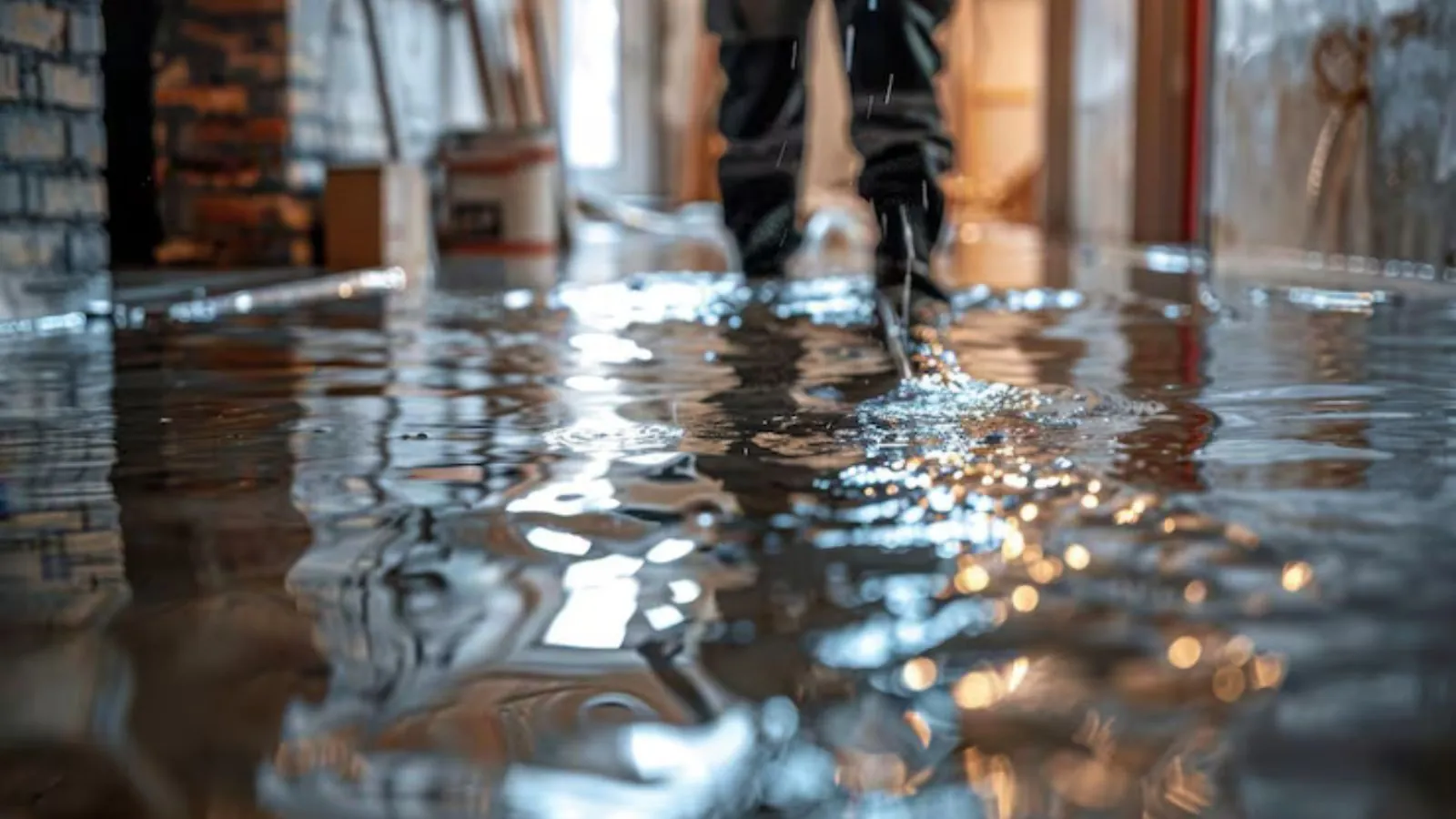
Emergency water extraction in Glastonbury means removing standing water from floors, carpet, basements and ground-level rooms with pumps and extraction units before it reaches the materials underneath. It is the first step of any water damage restoration job, and it comes before drying, cleaning or repair.
This page covers water that is on the floor right now. The phone line is open 24/7, including nights and weekends, so you do not need to wait for business hours. While you call, keep people and pets out of the water, lift anything valuable off the floor and shut off the main water valve if the source is still running and the valve is dry and easy to reach.
When standing water is an emergency
Water that has been on a floor for a few hours is already moving into carpet pad, baseboards and the lower edge of drywall. Water that reaches electrical outlets, a furnace or a panel changes the job completely, because the first concern becomes safety and not cleanup.
If water is touching anything electrical, stay out of the room. Cut power at the panel only if you can reach it while standing on a dry surface. If you smell gas, see sparking or cannot tell whether the power is off, leave the home and call 911 or your utility before calling us.
Stay out of water near electricity
Do not wade into a flooded basement or room where outlets, extension cords, a water heater or a panel may be live. Wait for the power to be confirmed off. A wet floor is not worth an electrical injury.
What extraction involves, step by step
Extraction is not just running a pump. The crew first finds out where the water came from and whether it is still coming, because pumping a room that keeps refilling accomplishes nothing.
- 1
Find the source and stop it
The supply line, drain, appliance or opening is identified and shut off, or isolated until a plumber or roofer can repair it.
- 2
Remove the bulk water
Portable pumps and extraction units pull standing water off hard floors. On carpet, a weighted extraction head draws water out of the fibers and the pad below.
- 3
Lift what cannot dry in place
Soaked carpet pad, loose trim and swollen furnishings are pulled so water is not trapped beneath them.
- 4
Read the moisture
Meters check the subfloor, wall bases and framing so the drying plan is built on readings instead of guesses.
- 5
Hand off to drying
Air movers and dehumidifiers take over. See structural drying and dehumidification for how that stage works.
Stop the source if you safely can, then call. The line answers all night.
Match the situation to the response
A rough guide. Actual scope depends on readings taken on site.
| What you see | Likely approach | Why it matters |
|---|---|---|
| Damp floor, no standing water | Moisture check and targeted drying | Hidden dampness can outlast a surface that looks dry |
| Water covering a room | Pump or extraction unit, then drying | Water sitting on subfloor keeps wicking into framing |
| Water that came from a toilet, sewer line or outside flooding | Treat as contaminated, see sewage backup cleanup | Porous materials in contact with contaminated water are usually removed |
| Water in a finished basement | Extraction, then check walls and contents | Carpet, drywall and stored boxes absorb fast, see basement water damage cleanup |
What affects the scope and price
Nobody can price a flooded room from a phone description alone. The scope and price are explained before work starts, and these factors move the number most.
Water category
Clean supply water, gray water from an appliance or contaminated water each call for different handling and disposal.
Depth and area
A damp bathroom and a flooded ground floor are different jobs in labor, equipment and time.
Materials involved
Concrete dries differently from carpet pad, hardwood or drywall, and some of those are removed instead of dried.
How long it sat
Water that has been present for days has usually spread past the visible edge.
Access
Finished basements, crawl spaces and tight rooms change what equipment can be used.
Safety first on a wet floor
Standing water over outlets or cords is a shock hazard. Cut the power to the area from a dry panel, and do not use a household vacuum on water. Our extraction methods follow the guidance in ANSI/IICRC S500.
- 1
Switch off the circuit
Only if you can reach the panel dry.
- 2
Do not use household vacuums
They are not built for water.
- 3
Keep children out
Wet floors and cords are hazards.
Insurance and documentation
Sudden and accidental water damage, such as a failed supply line, is often covered by homeowners policies, while gradual leaks and neglect often are not. Flood damage from outside water is usually excluded and needs separate flood coverage. Check your policy or ask your insurer about your specific situation.
Photos of the water before extraction, readings from moisture meters and an itemized scope all help document a loss. Ask for those records before the crew leaves.
Extraction across Glastonbury and nearby towns
Glastonbury drains toward the Connecticut River along its western edge, and the regional hazard mitigation profile names Hubbard, Roaring, Salmon and Slab Gut Brooks among the main waterways. Check the FEMA flood map for your address to see whether any part of your property is mapped, and read flood damage cleanup if the water came from outside.
The same phone line covers 06033 and 06073 in Glastonbury and calls from Marlborough. Yard or pool pumping is a different service, so ask about it plainly on the call.
Questions people ask
Do you handle water extraction emergencies at night or on weekends in Glastonbury?
Yes. The phone line is open 24/7, every day of the year. Call whenever the water is found, describe what happened and the crew will explain the scope and price before work starts.
How long can carpet stay wet before it becomes a problem?
Wet carpet and pad can begin to support mold growth in roughly one to two days, according to EPA guidance on mold after water damage. Extraction and drying should start as soon as it is safe.
Can I rent a pump or use a shop vacuum myself?
A shop vacuum can help with a small clean spill, but it will not pull water out of a pad or subfloor. Never use one on sewage or contaminated water. Equipment is used on the job and is not rented out.
Do you pump yards, pools or flooded driveways?
No. Outdoor yard and pool pumping is a different trade. This service is for water inside homes and buildings.
Do you cover Marlborough as well as Glastonbury?
Yes. The same line takes calls from Marlborough, ZIP 06447, along with Glastonbury ZIPs 06033 and 06073.
Call the 24/7 line and the extraction plan starts with your first answers.